
A one-person biotech has one founder who owns the science and the decisions. AI does the information work: reading the literature, tracking the field, drafting the documents. Fractional experts hold the seats the company needs for a few days a month, and CROs and CDMOs do the lab work, the manufacturing and the trials. Every piece of it exists today.
This page follows the trend, describes the practice, and reports how the functions actually get covered.
Ask why a biotech with one asset employs sixty people. Most of the org chart exists to move information: find it, read it, reconcile it, and turn it into a decision. For twenty years, every new question became a new hire, a new vendor, or a consultancy.
Biotech outsourced the physical work decades ago, to CDMOs, CROs and sites. The information work is the part that just changed its price. Headcount was the price of information. Agents just changed the price.
Emerging biopharma companies accounted for 68 percent of all clinical trial starts in 2025, up from 56 percent in 2019.
Source: IQVIA Institute, Global R&D Trends 2026, May 2026In June 2025 the FDA launched Elsa, a generative AI tool its staff use for clinical protocol reviews, scientific evaluations and choosing inspection targets. In December 2025 it deployed agentic AI to all employees, for tasks that include pre-market reviews and post-market surveillance.
Sources: FDA, June 2, 2025 · FDA, December 1, 2025In October 2025 Anthropic launched Claude for Life Sciences, with connectors to Benchling, PubMed, 10x Genomics and other research platforms, for work from early discovery through to commercialization.
Source: Anthropic, October 20, 2025In 2025 Nature Medicine published a randomized, placebo-controlled phase 2a trial of rentosertib in idiopathic pulmonary fibrosis. Both its target and the molecule were found with generative AI.
Source: Xu et al., Nature Medicine, 2025 · PubMedIQVIA reported early evidence of stronger success rates for AI-enabled programs at emerging biopharma companies, and cautioned that the improvement is not yet visible across the whole industry.
Source: IQVIA Institute, May 14, 2026From my own work: a competitive landscape that used to take a consulting team a quarter now takes about a week, and it stays current after the slide is made. Daniel Branco
People for context and judgment. Agents for information. Partners for the physical work. This is how each function of a biotech can be covered when the company is one founder.
Filled marks the main way a function is covered. Outlined marks support.
Agents fail quietly, so the design has to plan for it: read the primary source, check every load-bearing claim before a person sees it, and label what is sourced and what is inferred.
Three things agents do not supply: context, meaning which question matters this week; judgment, meaning someone accountable signs every decision; and aspiration, meaning what the company actually wants to become. Those stay with the founder.
OnePersonBio runs the information functions of a biotech for founders who won't hire a department. One seat, agents built on BioAlma, a workspace of your own, and a channel to the agents where you already work.
The practiceOne company, one function, how it was covered, what happened. From the practice's own engagements, published with each company's written OK and described without a name until then.
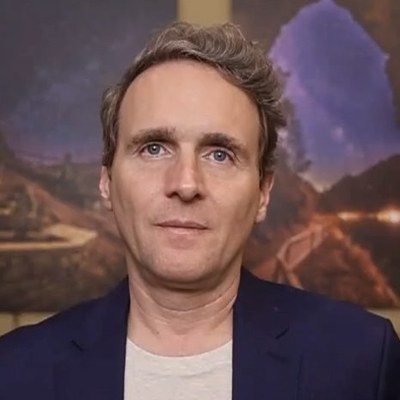
He writes the CoCreating.Bio newsletter on AI and biotech, and keeps this page as a public record of the one-person biotech as it forms.
Disclosure: Daniel founded BioAlma, an AI intelligence platform for biotech. It is the platform behind OnePersonBio.